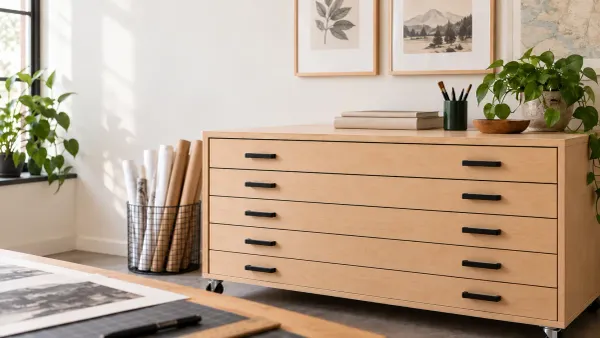
Art Paper Storage Cabinet – Keep Artwork Flat, Clean & Ready to Use

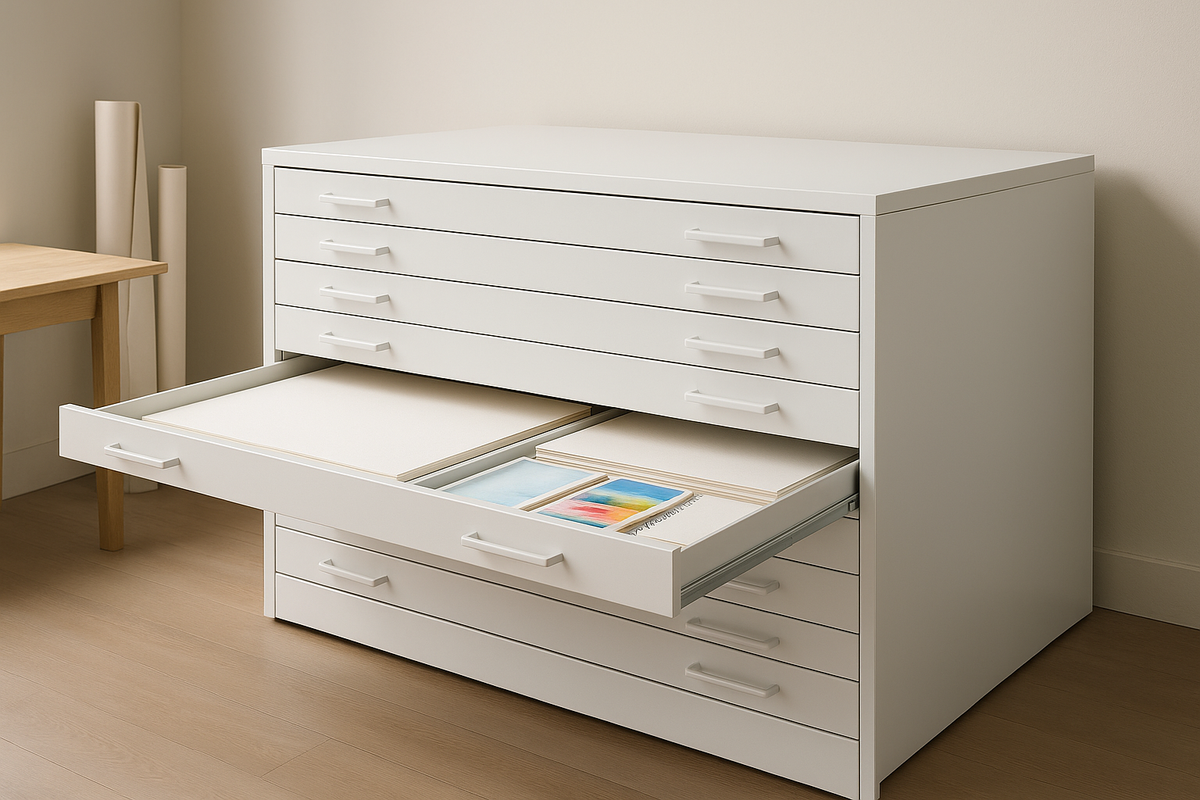
A great studio runs on access, not luck. An art paper storage cabinet keeps sheets flat, protected, and easy to retrieve, so projects move from sketch to framing without bent corners or mystery stacks. The right cabinet also standardizes sizes, speeds inventory checks, and protects high-value papers from dust, light, and handling wear.
What Is an Art Paper Storage Cabinet?
An art paper cabinet is a shallow-drawer unit sized for common sheet formats, designed to store paper flat and shield it from curl, dust, and light. Unlike general furniture, these cabinets use full-width drawers and low profiles to distribute weight evenly, which preserves edges, surfaces, and sizing across repeated access. Artists, designers, printmakers, photographers, and architects all benefit because every sheet becomes visible, reachable, and safer to handle.
Why Choose a Dedicated Cabinet Instead of Shelves?
Flat, shallow drawers prevent stack pressure and abrasion while making each sheet easy to see and lift with two hands. Vertical bins and open shelves invite curl, edge bruising, and friction; a proper cabinet minimizes handling, reduces rework, and keeps premium papers saleable and exhibition-ready. Over time, that predictability matters more than any single heavy-duty ream wrapper or improvised storage hack.
Which Sizes and Drawer Counts Make Sense for a Studio?
Start with the largest sheet you intend to store, then add clearance for sleeves and backers. Most interiors comfortably fit 18"×24", 22"×30", or 24"×36" papers; architectural formats such as 30"×42" are common in design workflows. Five-drawer sections suit active studios that want shallow stacks and quick pulls. As inventory grows, a second section stacked on a base builds capacity without stealing additional floor area.
Dimensions and Capacity
- ~2"–2¼" interior height per drawer works for most papers and thin mounts.
- Depth and width should exceed your largest sheet’s longest dimension.
- A reserved “in-process” drawer prevents rushed refiles during deadlines.
What Materials and Construction Details Should Be Prioritized?
Steel and hardwood art paper storage cabinets both protect paper; the choice comes down to environment and aesthetics. Steel is favored by schools and production shops that expect frequent wipe-downs and occasional cart bumps. Hardwood (especially oak) brings furniture-grade presence to client spaces and mixed-use studios, aging gracefully while still delivering archival geometry.
Well-built cases stay square under load, so slides run true for years. Full-extension slides matter more than raw weight rating because they allow two-hand support beneath a sheet rather than pinching corners. Label-friendly fronts and consistent pulls reduce tugging and keep handling calm on busy days.
Quick Compare
- Steel: rugged, stackable, low-maintenance; ideal for high-traffic studios.
- Hardwood/Oak: furniture look, warm finish, great for client-facing rooms.
How Do You Organize Art Paper Storage Cabinet for Speed Without Sacrificing Care?
Labels and a mirrored digital index turn storage into workflow. Mark drawer fronts by size, surface (hot press/cold press), weight, and brand so helpers can file accurately without extra handling. A simple spreadsheet or cloud note that mirrors the physical layout allows fast searching and adds purchase dates, lot numbers, and condition remarks. Over time, that record explains why one batch behaves differently in wash or lift tests and keeps replacements consistent.
Drawer allocation also affects tempo. Keep delicate stocks and frequent pulls near the top, where bending and reach are minimal. Every day, drawing and watercolor papers live mid-bank for fast access. Heavy boards and oversize packs settle at the bottom where the structure is strongest.
How Do Cabinets Compare With Flat Files?
Function overlaps, but emphasis differs. Flat files typically house finished works on paper, such as drawings, watercolors, prints, maps, and proofs, where shallow drawers protect surfaces, preserve sequencing, and streamline presentation or framing. An art paper storage cabinet, by contrast, focuses on uncut sheets, reams, and fragile stocks awaiting production, so visibility, quick counting, and minimal handling take priority over display readiness.
The systems are usually operated simultaneously. Inventory is sorted by size on a paper cabinet, organized by weight and surface, eliminating waste and last-minute replacements, with completed works, edition sets, and references in a flat-file bank. They are together, forming a clean separation between materials in development, pieces ready to critique, ship, or display, each at the stage of the workflow that best suits it.
What Maintenance Keeps Performance Steady for Years?
Light, regular care beats occasional heroics. Wipe fronts and pulls, dust tops, and vacuum rails and corners each quarter to keep grit out of slides. Twice a year, refresh the desiccant, replace worn liners, and update labels as inventory changes. Once annually, re-level the case, rotate older lots forward, and photograph drawer contents for insurance and course-planning notes. These short sessions preserve smooth motion and prevent the slow drift toward overfilled, hard-to-use drawers.
What Are Common Pitfalls and Easy Fixes?
Overfilling remains the fastest path to damage; when a stack resists, distribute weight to another drawer. Mixed, unprotected stocks scuff easily, so sleeves and routine interleaving pay off quickly. Sun and HVAC exposure introduce avoidable cycles. Relocate the cabinet or add shades and baffles to calm the environment. Small, proactive moves prevent expensive paper waste.
Final Words
An art paper storage cabinet trades clutter and curl for visibility and control. With smart sizing, neutral liners, and steady routines, paper stays pristine, pulls get faster, and schedules stay the same, proof that good storage is a creative tool.
Frequently Asked Questions
Is It Better to Store Art Flat or in a Folder?
It is usually better to store art flat because this helps prevent bending, creasing, and surface damage over time. Flat storage is especially important for delicate works, prints, and large paper art, which can easily warp if pressed unevenly.
What’s the Best Way to Store Artwork?
The best way to store artwork is in a cool, dry, clean space using archival materials that protect it from light, moisture, and physical damage. Artist paper storage drawers are all helpful for preserving paper pieces, photographs, and large paper art.
How to Store Big Sheets of Paper?
Large paper art should be stored flat in an oversized archival folder, portfolio, or drawer to keep it smooth and protected. Rolling is sometimes possible for sturdy materials, but flat storage is the safest option for large paper art because it reduces the risk of creases and edge damage.
What Drawer Height Works Best for Most Papers?
About 2"–2¼" interior height balances capacity with low stack pressure and leaves room for sleeves, glassine, and easy two-hand lifts
Are Locks Useful on Artist Paper Storage Drawers?
Locks help in shared studios and classrooms and prevent accidental pulls during critiques or client visits. They also support the chain of custody for higher-value stocks.
Can Mounted Sheets or Boards Share Drawers With Loose Paper?
Separation is safer. Heavy boards can imprint neighboring sheets; store mounts in dedicated drawers or rigid folders to avoid telegraphing.
How Many Drawers Should a Small Studio Start With?
Five drawers handle active stocks comfortably. Add a second five-drawer section as inventory grows to avoid pressurized stacks.
Is Assembly Difficult, and What About Moving Later?
The majority of the units are shipped ready or require simple measures. Transfer single sections using tools, reposition them on the new site, and examine slide alignment prior to reloading.