White Foam Board: Lightweight Board for Clean, Flat Displays
Get white foam board for professional displays. Lightweight board with a smooth surface, clean edges, and easy cutting for mounting needs.

White foam board is a trustworthy & straightforward choice if you want the artwork to appear clean, flat, and easy to display. Most artists and creators mount their prints, construct display boards, and hastily assemble mockups, all of which remain tidy. It is also a convenient option for practice work, as it helps support paper without adding extra weight.
What Is White Foam Board?
White foam board is a stiff foam-core paperboard with white paper pasted on it, used to mount prints, signs, and clean presentations. It keeps the artwork still, so it appears straight in the photos and face-to-face. It is also effective in ensuring that you carry work without the corners curling.
Foam board is often called "white foam core board" in stores and print shops. You'll find it in different thicknesses, from thin sheets to more solid panels. Some options are acid-free for framing and extended storage. Others are meant for quick signage and short-term display.
How White Foam Board Is Made?
A closed-cell polystyrene foam core sits in the middle, giving the board its stiffness. Manufacturers cut that core to an even thickness, so the sheet feels steady in your hands. Because the core is mostly air, the panel stays light without feeling flimsy on the table.
White paper liners are glued to both sides, creating a bright face for prints and labels. Some brands add a coated surface, which helps marker ink sit cleaner and bleed less. With matching front and back layers, the board stays flat longer, unless moisture gets in.
She touches, but not all feel like this. Some faces are smoother and brighter, which is essential in clean typing and photo mounting. The other scuff more, and this is evident in the transport. Surface quality, rather than thickness, is a consideration if you are concerned with a nice finish.
Why Artists and Designers Use White Foam Board
White foam board keeps your work neat and straight, so it's popular for critiques, client reviews, classroom displays, and quick mockups.
- Pasted photos, prints, and sketches on the wall appear finished.
- Engravings, designs, and pack tests in school.
- Remains clear in the light, and hence, the text and images are easy to read.
- Has a low weight when you have boards in town today.
What are the Common Uses of white foam core board?
White foam core board is used for mounting artwork, building presentation boards, making models, and creating clean templates for cutting.
For Mounting Artwork
White foam board is a low-end backing that is used to keep prints and drawings flat. Archival tape hinges will produce a clean appearance without permanent attachment. A heavier board will help reduce bowing when handling a large piece.
For Displays and Presentations
For presentations, you can use a foam board with a bright background that is easy to read. In cities such as Toronto, it is normal to have school fairs, studio critiques, and design reviews. When you are nailing it on the wall, hold the corners up, or the board will fall.
For Practice and Study Work
As a portable drawing board, foam board can be used for drawing when you are on the go. Stick on tape paper to it for thumbnails, lettering drills, and quick composition studies. It is also useful when you require straight edges on the border and for practicing the layout.
For Models and Visual Projects
Foam board is used with models because it cuts cleanly and holds its shape. It is utilized by designers in mock packaging, display stands, and plain architectural forms. It saves time and maintains order when you need to test things quickly.
Different Sizes Explained
White foam board is available in an impressively wide range of sizes, and this is a product attribute. The more miniature sheets are used for fast mounting, classroom mounting, and small-portfolio mounting. Midsize boards apply to posters, series of photos, and clean presentations. The larger boards are also suitable for events, but they are delicate to handle because the corners dent easily.
20x30 white foam board
The typical student poster and small photo sets can be fitted on a 20x30 board, leaving clean margins on their edges. In Toronto or Dhaka, this size fits perfectly in most portfolios, and it does not have to be folded clumsily on buses every day. To mount prints, follow the rules for applying a thin adhesive hinge, and press the center first so the corners do not lift in the future.
24x36 white foam board
A 24x36 board is a common presentation size, making it well-suited for design reviews and open studios. You get extra room for titles, grids, and captions, which helps when several pieces must be read from three feet away. Because it is wider, tape your print with light, even pressure, and avoid wet glue lines near the outer edges.
30 x 40 white foam board
Big displays, storefront signs, and show boards require a bigger presence on a 30 x 40 board. Use a long metal ruler and move it a few times; it is easy to crush the foam and rip the paper with a single heavy cut. When sending by mail, it is better to use hard packaging materials and corner protectors, particularly in rainy months, when boxes can become soft during transit in this country.
How to Cut and Handle the Board Properly?
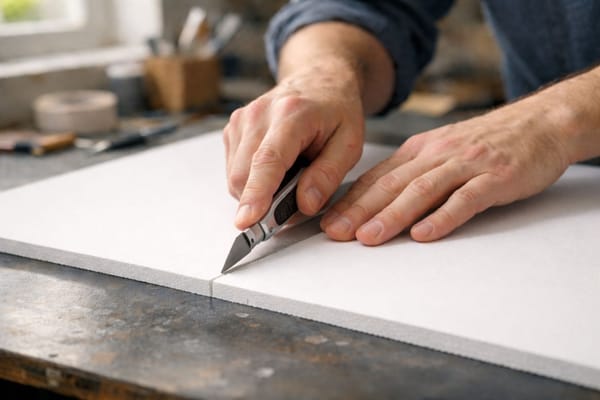
To cut a white foam board, you can use a sharp blade and a metal ruler, then support it with both hands to avoid dents.
Tools Artists Use to Cut White Foam Board
When the blade is sharp and new, a utility knife or craft knife is the best tool. Use it with a metal straightedge, since plastic rulers can scratch and create curved lines. If you cut frequently, keep more blades and replace them early.
Tips for Clean Edges and Sharp Corners
A large number of light passes, rather than a single deep cut, can be forced. This prevents tearing of the paper face and crushing of the foam. Make a stop at the corner, turn a board, and complete the line at the other side.
Preventing Dents, Bends, and Damage
Most damage happens during carrying, not during cutting. Hold the board with two hands and avoid squeezing the center. When stacking sheets, place a clean sheet on top to prevent grit from pressing into the surface.
If you're working on client presentation boards, treat foam board like photo paper. Keep your hands clean and your workspace clear. A single smudge can show under bright lights. Also, don't lean large sheets against a wall for days, because they can slowly bow.
How to Choose the Best White Foam Board?
You can choose the best white foam board by checking thickness, surface smoothness, and acid-free labelling for your project's lifespan today, too. Acid-free choices provide more secure long-term storage for framing or selling work. Standard foam board is good enough for small exhibits or mockups.
- Use heavier sheets where the mount is large and has to be carried around.
- Choose a more fluid shape of labels, text, and crisp images.
- Verify that your frame or archive work is acid-free.
- Do not use boards of bowed corners or of soft and crushed edges.
- In humid climates, select boards with more solid faces and storage.
Storage and Care Tips for Artists
Store white foam board flat, dry, and covered so the faces stay clean and the corners stay crisp for extended use. Keep it away from heat and damp air, because moisture causes waves and curl. Covering it also prevents scuffs, dust marks, and pressure dents.
- Arrange store boards with clean sheets, one atop the other, flat.
- Keep them out of the windows, kitchens, and damp corners of the basement.
- Use a stiff portfolio during journeys to studios and classrooms.
- Do not put heavy tools on top; signs of pressure are fast.
- On it, you put paint, and seal the sides so that they do not curl.
Where to Buy White Foam Board
Blick Art Materials is a practical pick when you want consistent sizing and dependable surface quality. It is possible to have a variety of thicknesses with and without high-grade mounting and presentation boards. It also comes in handy when you need matching sheets for classes, studios, or display teams.
Amazon is a good option when you want quick delivery or bulk packs for events and school deadlines. You can compare pack counts, sizes, and finishes without visiting multiple shops. Still, check the packaging notes because corner damage is common during rough shipping.
Final Words
- The white foam board keeps the artwork flat and makes it appear clean.
- It is excellent for sticking prints, posters, and classroom presentations.
- It is also applicable to models, mockups, and a quick design layout.
- Select the thickness based on the size, travel, and the length of time it will be kept.
- Light passes are cut, and the blades are changed before they drag.
- Keep it flat, dry, and covered to keep out edges and surfaces.
Frequently Asked Questions
Is White Foam Board Good for Painting?
Light acrylic paint can be taken, however, with a first prime. Do not have your watery layers, as they cause the paper faces to ripple.
Does the Board Warp Over Time?
Yes, it might bend when there is a sudden temperature change or when it is exposed to moisture. Seal all the sides and store flat to reduce curling to a large extent.
Can This Be Framed?
Yes, foam board is often used as a backing in frames. Use spacers so the artwork never touches the glass during display.
Is the Board Acid-Free?
Some sheets are acid-free, but many budget boards are not. Check the label before framing or storing work for years.
Can White Foam Board Support Heavy Artwork?
Thicker foam board holds light prints, but heavy panels can sag. For weighty art, add a wood backing or use an aluminum panel.