How to Cut Gatorfoam Board for Art Projects
Get clean, professional cuts on Gatorfoam board for art projects. Simple tools, clear steps, and expert tips. Master the process today.

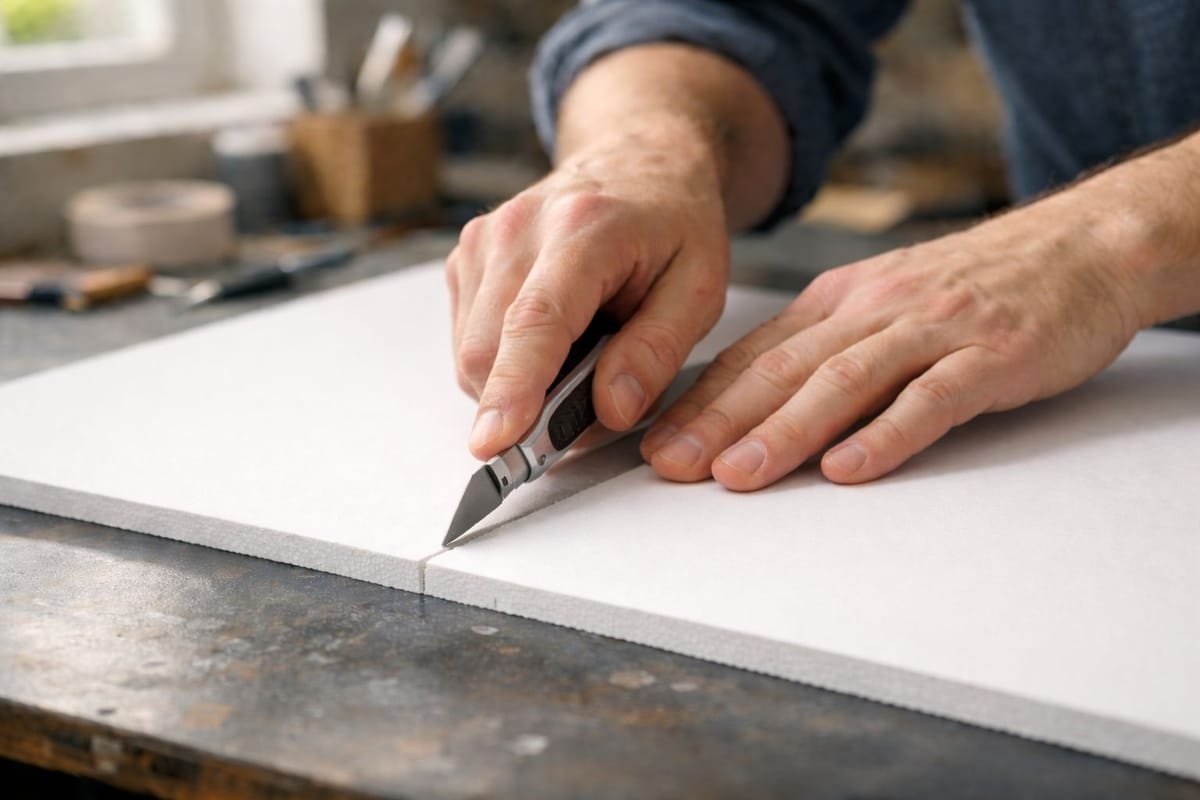
Cutting Gatorfoam Board cleanly takes more control than regular foam board because the surface is tougher and the board resists your blade. Most artists encounter chipping, jagged edges, dragging blades, and squarish drifting lines. Those issues are waste boards and destroy a clean presentation. This guide helps you get straight cuts, smoother edges, and better results for mounting, portfolios, and display work in any studio setup.
What Makes Gatorfoam Board Hard to Cut
Gatorfoam Board is difficult to cut as its rigid surface layers do not give way to the blade, and thus, a line cut is likely to chip and tear. The heavier feel offers more drag, particularly in situations where you do not have a fresh blade. Edge quality is also affected by decreasing pressure, and therefore, force may cause edges to appear smashed rather than sharp.
Dense core and rigid surface layers create resistance, so your blade needs more passes to stay controlled. One-pass cutting usually fails because it grabs the surface and pulls tiny bits along the edge. Cutting pressure matters because heavy force makes the blade wander and can blow out corners.
Tools You Need to Cut Gatorfoam Board
You require a sharp blade, a straightedge that is stable, and you have a good cutting surface to make sure that every cut is clean, straight, and in control. The correct tools minimize the use of chipping and the repeatability of similar cuts in several boards. This is important to portfolios, customers, because boards and mounts are show-ready.
Best Knife for Cutting Gatorfoam Board
A utility knife usually works better than a small craft knife because it stays steady on long cuts and thicker boards. Snap-off blades are convenient as you are able to sharpen the blade in a snap without interrupting the work process. Wipe out the blade when it starts to drag, skip or have coarse edges.
Straightedges and Guides
A metal ruler is stronger than a plastic ruler because it will not flex or get nicked by the blade. Weight and grip matter because any slip will show as a jagged line on the board face. If your ruler is light, add a non-slip backing or use clamps for long cuts.
Cutting Surface
A cutting mat holds the blade and prevents the board from moving when making repeated passes. Hard tables have a higher rate of dulling of blades and may create rough edges due to premature collision of the blade on a hard surface. The stable mat is also used to save your working space and for a cleaner cut line.
Step-by-Step: How to Cut Gatorfoam Board Cleanly
Cut Gatorfoam Board cleanly by marking clearly, scoring lightly, making multiple controlled passes, and finishing with a steady final cut. This way, the tearing is minimized, and the edge remains sharp throughout its length. It also makes your board square, and therefore, mounting looks professional.
Step 1: Mark the Cut Line
Write with a pencil rather than a pen to be able to make corrections and not stain the face of a board. Light markings are superior since heavy lines may be left behind when a person mounts or trims them. Count twice and mark once to save wastage, particularly in border presentation.
Step 2: Score the Surface
Light pressure must be used at the initial pass to form a clean guideline in the surface layer. It is always important to keep the blade straight and not at an angle or cut off at an angle. The score pass of good prevents chipping since the blade will not tend to grab and tear.
Step 3: Make Multiple Passes
Slow repeated cuts are preferable to force as each cut is along the same groove and is straight. Heavy boards can be passed through a number of times, and that is nothing unusual when you wish to have a clean edge. Hold the ruler in one position and ensure that every stroke is straight.
Step 4: Finish the Cut
On the final pass, keep the same pace and pressure so the blade does not jump near the end. To avoid tearing the back face, support the board and do not bend it while finishing the cut. If the board snags, stop and add another light pass instead of forcing through.
How to Cut Thick Gatorfoam Board
Cut thick Gatorfoam Board by controlling blade depth, using more passes, and flipping the board when needed to protect both faces. Thick boards fight rushed cuts, so your goal is steady progress, not speed. Clean thickness cuts come from patience and fresh blades.
Slow repeated cuts are preferable to force as each cut is along the same groove and is straight. Heavy boards can be passed through a number of times, and that is nothing unusual when you wish to have a clean edge. Hold the ruler in one position and ensure that every stroke is straight.
When the cut becomes deep, flip the board, and you will experience an additional drag on the final part. The back face scoring assists in making the cut clean at the mid-point. This eliminates tearing and leaves the end edge more smooth.
Stop edges from bleeding away. To avoid edge blowouts, slows near corners, and completes each edge in marked passes. Damage to the corners normally occurs when the blade is bent or in an excessively quick exit. Hold an upright blade. Still hold and pause, and turn.
How to Get Straight, Clean Edges
The straight and clean edges are the result of a stable body position, strong ruler control ,and light passes that ensure there is no drift of the blade under pressure. Small setup changes create big improvements, especially on long borders for mounting. A straight edge makes the whole piece look more professional.
Body Positioning and Hand Control
Do that so that your shoulder follows the cut, as doing so will make you move straight. Navigate the cut not only using your wrist, but also using your shoulder and arm, as it is easy to twist. Hold your cutting hand loose to ensure that the blade is not wobbly.
Locking the Ruler in Place
Place the ruler using the non-cutting hand by firmly pressing but safely away from the blade. A significant factor that causes jagged edges is known as Ruler slip, since the blade tracks the moving guide. Use constant pressure throughout the cutting to ensure that the ruler does not pick up in the middle of the cut.
Avoiding Blade Drift
Blades sidewise last time you hurry, and also time your pushing is too vigorous, at least when there is resistance on the board driving surface. Any small cuts made during the cut easily deteriorate the line since the blade will jump up in the groove. In order to keep the cut on track and minimize side pressure, light passes are used.
Common Mistakes When Cutting Gatorfoam Board
Most rough cuts come from rushing, using worn blades, or trying to force a deep cut too early. These mistakes show up as chipped edges, torn faces, and crooked borders. Fixing them usually costs less time than redoing a full board.
- Using dull blades
- Applying too much pressure
- Cutting in one pass
- Using the wrong ruler
- Cutting on unstable surfaces
Safety Tips When Cutting Gatorfoam Board
Safe cutting of Gator foamboard implies minimizing the course of the blade, putting hands in the right place, and maintaining a stable posture in order to minimize the risk of slip-ups and sudden jumps.
Blade Control and Hand Placement
Keep your non-cutting hand away from the blade path and never place fingers in front of the cutting direction. Hold the ruler with your palm and fingers spread wide for control, not pinched near the edge. Slow cutting reduces slips because you are not fighting the board.
Cutting Direction and Posture
When there is an advantage in it, cut away from your body, particularly in situations where, when passing long, it may be possible to gather momentum. Make your wrists straight and an elbow comfortable to ensure that the blade remains stable. Good posture helps avoid the sudden jumps of the blade that occur when your arm is put in a new angle of cutting.
Safe Blade Disposal
Dispose of snap-off segments in a sealed container so loose pieces cannot cut you later. Do not leave blades on the table, because they can roll or get grabbed by accident. Store blades in a safe holder between cuts, even during short breaks.
Final Tips for Clean Results
Clean Gatorfoam cuts are achieved using an operation of slow traverses, new blades, and consistent setup habits, which minimize drag, drifting, and edge chipping. You do not require expensive equipment to achieve clean edges; however, you require consistency. Some little steps ensure that you can repeat the same results.
- Slow cutting beats force
- Fresh blades matter more than tools
- Use multiple light passes
- Practice cuts before final sizing
- Store boards flat to protect edges
FAQ About Cutting Gatorfoam Board
Can You Cut Gatorfoam Board With a Craft Knife?
Yes, but it works best on smaller pieces and thinner boards. For larger cuts, a utility knife often gives steadier control and straighter lines.
Does Gatorfoam Board Ruin Blades?
It has the ability to disfigure blades more quickly than typical foam board since the surface is more difficult. By replacing blades and making light passes, you will not get dirty edges and tears.
Can You Use a Table Saw or Power Tools?
Some artists use power tools for large volume cutting, but it requires careful setup and safety controls. For most studio work, a sharp knife and straightedge give more control and less edge damage.
Why Do Edges Chip When Cutting Gatorfoam Board?
Chipping usually comes from dull blades, too much pressure, or trying to cut in one pass. Light scoring and repeated passes reduce grabbing, which is the main cause of chipped corners and rough edges.