Pottery Wheels Explained: How They Work, What to Buy, and How to Start
Learn how pottery wheels work and what to look for before buying. This guide helps you choose the right wheel and start with confidence.

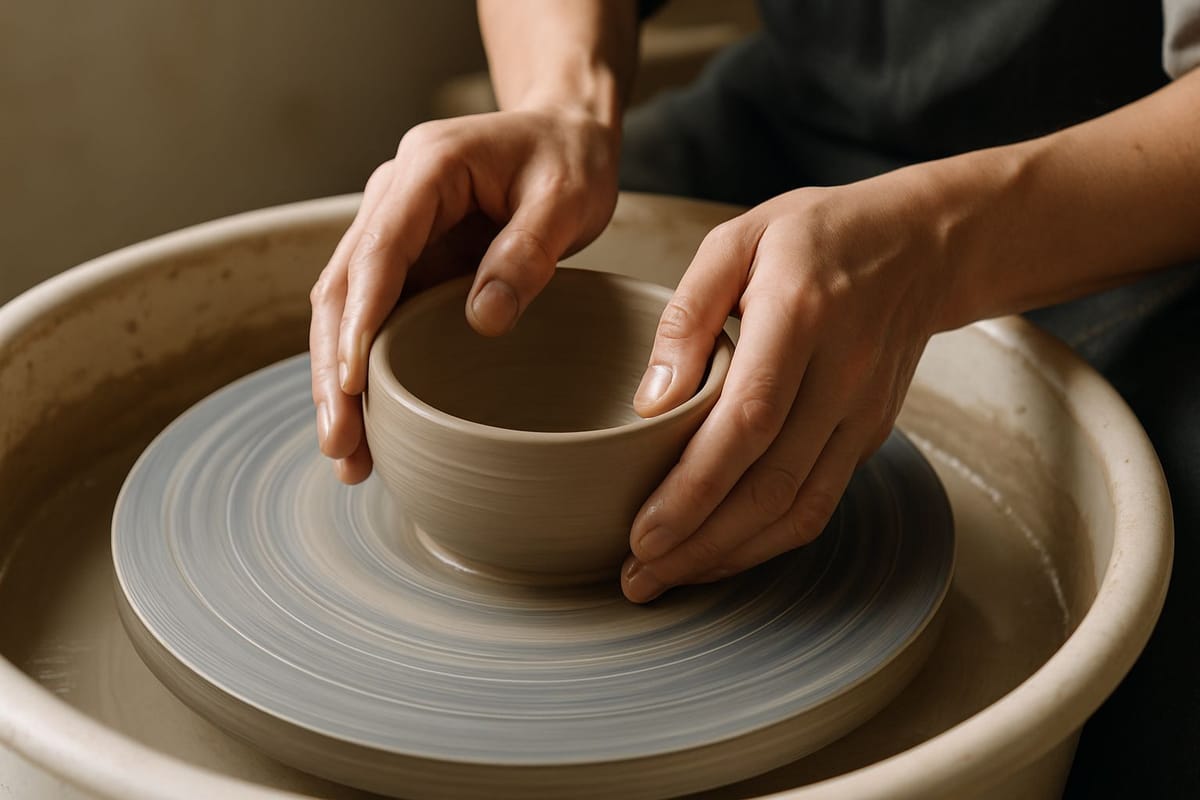
A pottery wheel turns soft clay into balanced forms that feel stable and refined. Home crafters and hobby potters, as well as studio artists, all depend on wheels to create regular shapes. The correct wheel at the outset will save cash, improve technique, and make the learning curve seem much more enjoyable.
What Is a Pottery Wheel?
A pottery wheel is a rotating platform that lets a potter shape soft clay into bowls, mugs, and other forms using steady, even movement. It supports the clay while the hands guide height, width, and curve. The result is work that feels more symmetrical and controlled than hand-building alone.
The key purpose of a wheel is simple: rotation makes it easier to raise walls, refine curves, and keep forms balanced from every angle. Contemporary wheels also help potters reproduce figures more precisely, which is handy for sets or useful ware. This is achieved with electric and manual wheels; the electric models use motors, whereas the manual ones are driven by leg power.
How a Pottery Wheel Works?
A pottery wheel works by spinning clay at adjustable speeds, allowing the potter's hands to compress, stretch, and refine the form while the wheel maintains a steady rotation. Spinning helps keep the clay in the center, with the wall's height, curve, and thickness moulded by hand. Alteration of speed assists in the various phases of the throwing process, which aid in centring, drawing the walls, and detailing without losing control of the piece.
The Main Parts of a Pottery Wheel
All pottery wheels begin with the wheel head, the flattish, round plate that holds the clay. It is typically composed of metal and has concentric rings that help center it. The motor or foot-powered one is located below and provides the torque that maintains the wheel head's rotation.
A splash pan is also fitted to most wheels to collect water and loose clay, ensuring the working area stays clean. The speed is controlled by pedal or hand control, allowing the potter to reduce it to get attention or increase it to get stronger pulls. The body is stable due to a strong seat and base that minimize fatigue and support a safe posture throughout the extended period of throwing.
How Speed, Torque, and Control Shape Clay
Speed influences how responsive the clay is; a faster speed is beneficial in the initial stages of shaping, whereas a slower speed is beneficial for centring, in f-tuning, and finishing. Torque refers to the wheel's resistance to pressure, which is essential when working on thicker lumps of clay. The effective management of speed and torque is also critical to preserving wall thickness; tall pieces prevent wobbling and twisting out of line.
Basic Throwing Steps for Beginners
It typically starts by centring the clay, during which the hands press and shape the lump until the clay spins without wobbling. The second process, opening the clay, forms the central hollow and begins to determine the base's thickness. Pulling and shaping, then raising the walls, refining curves, and setting the final profile before trimming and finishing, removing excess clay and cleaning the form.
Types of Pottery Wheels
There are various types of pottery wheels, each applicable to different spaces, habits, and levels of commitment. They are mainly electric wheels, manual kick/treadle wheels, compact tabletop wheels, and high-powered professional studio wheels.
Electric Pottery Wheels
Electric wheels have a motor with a pedal or knob that can be adjusted to vary the speed. They are applicable in homes, schools, and studios where consistent power is required, minimal noise is acceptable, and control is needed.
Manual Pottery Wheels (Kick & Treadle)
Wheels that use manual power use leg power to rotate a flywheel or treadle. They provide a less rapid frequency and a deep-rooted clay bond, which are suitable for conventional throwing.
Tabletop Pottery Wheels
Tabletop wheels are small and deal with light clay loads. They are efficient but low-intensity in large-scale projects.
Professional Studio Wheels
Studio wheels feature powerful motors, large wheel heads, and high torque. They are favourable to large shapes and everyday ceramics, hence are practical for highly skilled potters and in studio instruction.
How to Choose the Right Pottery Wheel
Look at the size of pieces you want to make, how often you will throw, and how much clay you use. Then select motor power, wheel head, speed control, and noise for your space and budget in a way that makes the wheel comfortable in the long run.
Power and Torque Requirements
Torque is vital for taller or broader shapes, as it maintains a constant speed under pressure. Novices may work with small power motors, whereas skilled potters may enjoy high-powered motors.
Wheel Head Size and Material
Most types are served with standard wheel heads, and larger heads accommodate larger bowls and platters. The wheel head, made of aluminum and steel, remains durable and straightforward to clean.
Speed Control and Stability
Foot pedals provide easy transitions to the speed, whereas knobs offer constant settings. The base is stable and minimizes vibration, while supporting clean, balanced shapes.
Space, Noise, and Portability
Compact or tabletop wheels are usually beneficial in small apartments and shared studios. The levels of noise differ, and the portable ones are helpful if you commute to classes or workshops.
Skill Level and Future Growth
Beginners need wheels that offer easy control, while as skills grow, they often require more torque and stronger frames. Choosing a wheel with upgrade-friendly features prevents outgrowing it too soon.
Budget Guide: What You Get at Each Level
Entry-level wheels usually come with low power, smaller wheel heads, and just enough control to learn and handle small projects. Mid-range wheels are more effective in terms of torque, endurance, and comfort. In contrast, professional-level ones are characterized by studio-quality motors, long service life, and stable performance under heavy daily use.
Best Pottery Wheel Techniques for Better Results
The best pottery wheel techniques focus on steady centering, gentle pulls, and careful finishing rather than complicated tricks. Minor fine-tuning of hand pressure, wheel speed, and body posture results in rapid enhancement of the smoothness of each piece.
Centring Technique Improvements in the Main
New throwers can have problems with wobble, poorly-centred clay, or clay that slants when thrown. Training in supporting elbows, applying constant force, and making slow-speed transitions will help with wobbling and teach how to go slow or fast.
Shaping Walls, Bowls, and Cylinders
Pulling movements are most effective when the pressure is mild, regular, and mutual, that is, the hands are applied together. Evenness of wall thickness helps hold up more solid shapes and basic practice pieces, like cylinders and an open bowl, which can help build confidence first, then proceed to more complicated shapes.
Trimming and Finishing
Clay can be trimmed when it reaches a leather-hard stage, where it maintains shape yet can be easily cut. Clean trimming angles, hone bases and make them lighter, and edge finishing give each piece a more professional feel through smoothing and careful finishing and the placement of edges.
Common Pottery Wheel Problems and How to Fix Them
Common pottery wheel problems usually show up as wobbles, collapsing walls, cracks, or uneven shapes. Most issues improve by adjusting moisture, slowing the wheel, refining hand pressure, and checking that the wheel is stable and level.
Clay Wobbling or Losing Shape
The clay tends to wobble when it is not well-centred or when pressure changes unexpectedly. After working with both hands at moderate speeds, re-centring and getting the form back under control is often achieved.
Walls Collapsing or Cracking
The walls fall when they are too thin relative to the height, or when water has leaked too much, softening the clay. Cracking also occurs when the clay is not dried evenly and slowly, and moisture is not balanced; these problems are minimized.
Uneven Thickness or Shape Distortion
Lack of wall thickness is usually the result of inconsistent pulling pressure or abrupt changes in area. In case of distortion, make sure the wheel is in a level position, check the wheel speed, and set the hand support back to balance.
How to Maintain a Pottery Wheel
Regular care keeps a pottery wheel running smoothly, prevents breakdowns, and protects the investment over many years of use.
Cleaning After Each Session
The surfaces around the splash pan, the wheel head, and the tray are rapidly covered with clay, water, and slip. The cleanup after every session to remove this residue helps maintain the cleanliness of the moving parts and minimize the amount of dried clay dust in the studio.
Motor and Bearing Care
Motors and bearings require occasional checks for noise, heat, or unusual vibration. Following the manufacturer's lubrication advice and replacing worn parts early helps maintain smooth, safe operation.
Long-Term Storage and Usage Tips
When not in use, covering the wheel helps keep it off dust and moisture. Humidity control, observation of metal rust, and untangling of cables and pedals are also performed to preserve long-term performance.
Final Thoughts
- Pottery wheels allow for even rotation, yielding uniform, repeatable shapes that are easier to produce.
- Electric and manual wheels are more versatile across various spaces and habits, whereas tabletop and studio wheels are designed for specific environments.
- The power, torque, and size of the wheel head must reflect the project size and level of skill.
- Centering, wall control and trimming results are enhanced through good technique.
- The usual problems usually go down to the moisture balance, speed or support.
- Cleaning and basic maintenance are performed to keep the wheel reliable and protect it during regular cleaning.
Frequently Asked Questions on Pottery Wheel
What Pottery Wheel Should a Beginner Start With?
The best option for a beginner is a mid-powered electric wheel with smooth foot-pedal speed control.
Is an Electric Pottery Wheel Better Than a Manual One?
An electric wheel is more convenient and easier to use, while a manual wheel is better if you want a traditional, leg-powered experience.
How Much Does a Good Pottery Wheel Cost?
A good beginner wheel generally starts in the mid-price range, while professional wheels cost more due to stronger motors and greater durability.
How Long Does It Take to Learn Wheel Throwing?
You can learn basic wheel control in a few weeks of steady practice, but more advanced skills take several months or longer.
What Size Wheel Head Do I Need?
Choose a standard wheel head for mugs and bowls, and choose a larger wheel head if you plan to make big platters or tall pots.