How to Use Rapidograph Pens: Techniques, Maintenance, and Best Practices
Master Rapidograph pens with simple guidance on technique, cleaning, ink flow, and long-term care to achieve sharp, reliable, and precise drawing results.

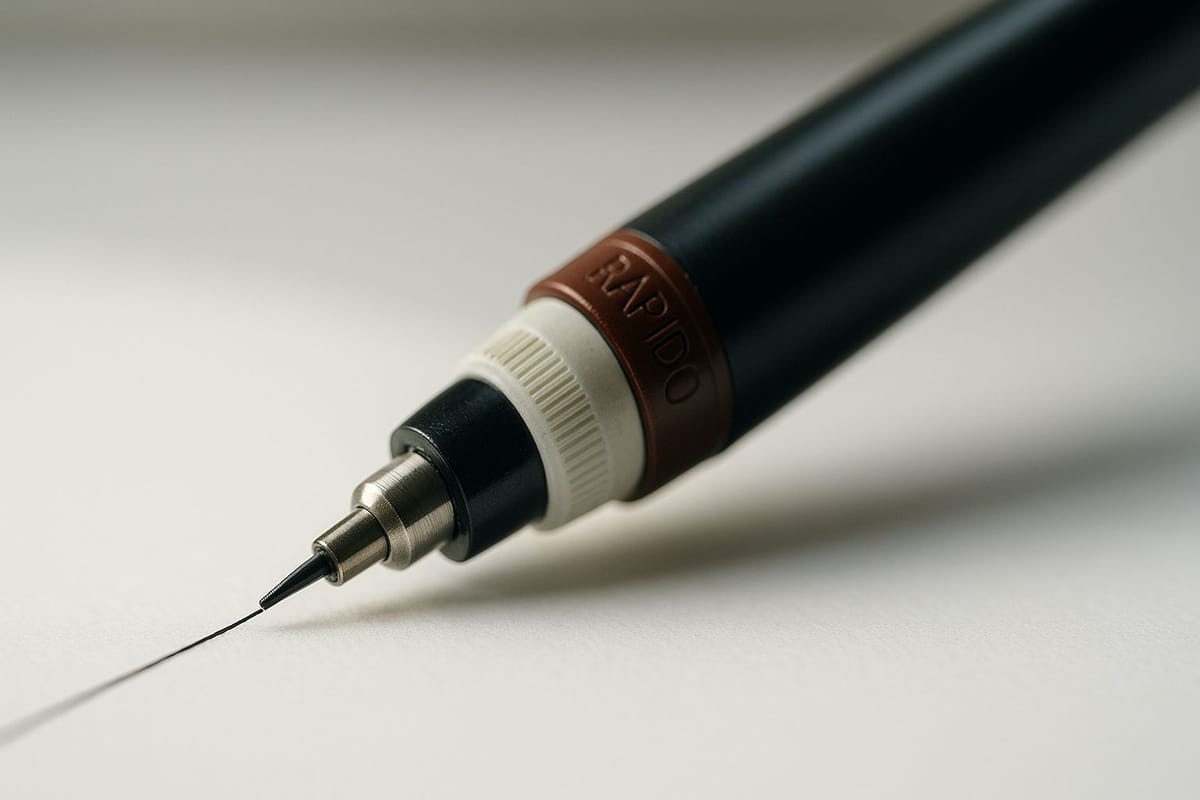
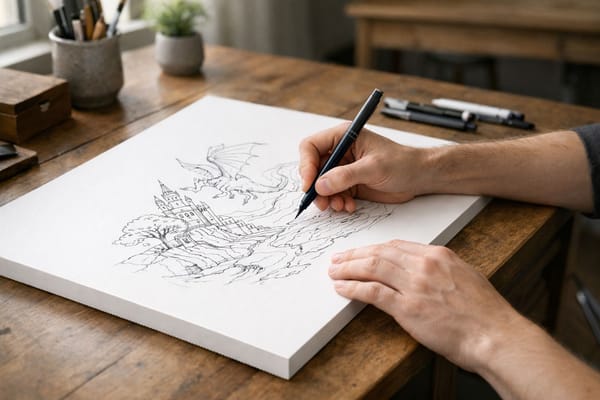
Rapidograph pens are favourites for clean, repeatable lines and highly detailed work. Their accuracy in the nibs and the fact that the ink system is refillable ensure that the drawings they produce are precise and consistent. These pens can last for many years with proper cleaning, good maintenance habits, and the right techniques, delivering professional-quality work on any project.
What Are Rapidograph Pens and Why Are They Used
Rapidograph pens are technical drawing pens with refillable reservoirs and tubular steel nibs designed to produce consistent, ultra-precise lines at fixed widths. The nib guides ink through a tiny tube, keeping line thickness stable from start to finish. This design makes them reliable tools for clean linework on drafting film, illustration board, and smooth paper.
Illustrators, architects, technical artists, and designers heavily rely on Rapidograph pens for detailed work. They are preferred for a consistent line width that does not vary with pressure. Archival-quality ink and precise control make them ideal for drawings that must remain crisp, reproducible, and professional-looking over time.
How to Choose the Right Rapidograph Pen Size?
Choosing the right Rapidograph pen size depends on line width, drawing scale, and whether the project is decorative artwork, technical drafting, or lettering. Smaller nibs are used for more detailed work, and larger sizes are used for bold outlines and borders, and for emphasis in areas.
Line Width and Application
Standard Rapidograph sizes such as 0.13 mm, 0.18 mm, and 0.25 mm are used for excellent detail, delicate hatching, and small-scale drawings. General outlining and legible technical notes can be done on medium sizes of between 0.35 mm and 0.5 mm. Larger sizes, such as 0.7 mm and above, are preferable for heavy contours, title blocks, and bold graphics content.
Artwork or Technical Use
Artwork that focuses on delicate textures, tiny patterns, or miniature illustrations usually benefits from the finer nibs. A system of multiple sizes is used in technical drawings, including the walls of an architectural plan or the symbols of an engineering diagram. Powerful lines require heavier nibs, whereas lines of dimension, grid, and fineness are applied to the most petite, narrowest sizes.
How to Fill a Rapidograph Pen?
You can fill a radiograph pen by opening the ink reservoir, adding compatible technical ink slowly to avoid overfilling, and reassembling the pen carefully. Hence, the flow remains smooth and reliable.
Step-by-step: How to Fill a Rapidograph Pen
- Very carefully screw the barrel out of the nib part to reveal the ink reservoir.
- Hold the reservoir upright and check that it is clean and free from dried ink.
- Shake the ink bottle lightly if recommended by the manufacturer, keeping the cap secure.
- Open the ink bottle and carefully bring the reservoir close to the opening.
- Fill the reservoir slowly, watching the level and stopping before it reaches the very top.
- Wipe any ink from the outside of the reservoir with a soft cloth or tissue.
- Screw the reservoir and nib section back together firmly but without excessive force.
- Hold the pen upright for a moment, then test on scrap paper until the line flows evenly.
Standard Techniques for Drawing With a Rapidograph Pen
Rapidograph drawing techniques depend on both uniform pressure and controlled strokes, and on systematic techniques such as cross-hatching, stippling, contouring, and outlining to regulate tone, depth, and texture.
Cross-hatching for Shading
Cross-hatching involves placing layers of parallel lines that intersect at angles, creating shading and tone. The spacing between the lines is very close, which results in darker tones; the spacing between the lines is far apart, which indicates light areas. Complex forms, such as shadows in buildings, folds in fabrics, and organic textures, can be rendered at different angles and densities.
Fine Outlines for Architecture or Design
Architectural elevations, floor plans, and product drawings need delicate outlines. The thin Rapidograph lines will allow making measurements readable and the edges artfully delimited against white space. Regularly spaced outline thickness will provide the drawing with a professional, at-a-glance look that is reproduction-free in both print and scanner print.
Clean Contour Line Drawing
Contour line drawing focuses on the edges and main shapes of a subject without heavy shading. A Rapidograph pen is excellent for this because it keeps each stroke crisp and even. Smooth, uninterrupted contours help describe form, gesture, and structure simply while leaving room for colour or tone added later.
How to Clean a Rapidograph Pen?
A Rapidograph pen can be cleaned as follows: with great care, disassemble it, then rinse the remaining ink from the pen, carefully dry it, and reassemble it so that the small ink channel remains open and active.
Disassemble Carefully
The nib unit has small, delicate components; thus, disassembly must be performed step by step according to the directions provided by the maker. Items must be put on a clean surface in the sequence they were taken off. In this cautious technique, there is a possibility of not losing parts or bending the fine inner wire.
Flush With Clean Water or Pen Cleaner
When it is opened, the nib and ink reservoir can be washed with clean water or any suggested pen cleaner. Avoiding harsh flushing helps remove dried ink from the narrow tube and feed. Light soaking can be applied to recalcitrant residue, but harsh chemicals or excessive force must be avoided to prevent damage to the inner components.
Dry Slowly and Reassemble
After rinsing, parts should be dried with lint-free cloths or allowed to air-dry on a clean surface. Ink flow can be influenced by moisture trapped in the nib; therefore, ample time should be allowed for it to dry. After everything is dried up, the pen can be put back together in the proper sequence and checked with fresh ink on scrap paper.
Final Thoughts
- Rapidograph pens produce sharp, repeatable technical and artistic lines.
- The right workplace is furnished with a choice of nib sizes: fine detail and bold construction are encouraged.
- Filling and light cleaning of pens increases life and reliability to a considerable extent.
- Clogging is avoided through regular maintenance that ensures smooth ink flow.
- Considerate craftsmanship makes these aids worthy to be permanent studio and drafting companions.
FAQs
Can Rapidograph Pens Be Used With Any Type of Ink?
They should be used with technical or manufacturer-recommended inks designed for tubular pens. Incompatible inks may clog the nib or damage internal parts.
What Kind of Paper Works Best With Rapidograph Pens?
Smooth, high-quality drawing paper or drafting film works best because it reduces snagging and feathering. Rough paper can cause scratchy lines and inconsistent flow.
How Often Should a Rapidograph Pen Be Cleaned?
Regular cleaning is recommended whenever ink is changed or if the pen has not been used for a while. Frequent users often clean their pens on a weekly or project-based schedule.
Why Does a Rapidograph Pen Sometimes Stop Drawing Mid-Line?
Flow interruptions may come from dried ink in the nib, low ink levels, or debris in the ink channel. A careful rinse and refill usually restores consistent lines.
Can Rapidograph Pens Be Used Over Watercolour or Marker?
They may be applied to completely dry watercolour or alcohol-based marker on appropriate paper. It is advisable first to test it in a small area to ensure that no bleeding, lifting, or feathering occurs.