Acrylic vs Oil Paint: A Complete Guide to Choosing the Right Paint
Confused between acrylic and oil paint? This guide breaks down pros, cons, and best uses so artists can choose the right paint with confidence.

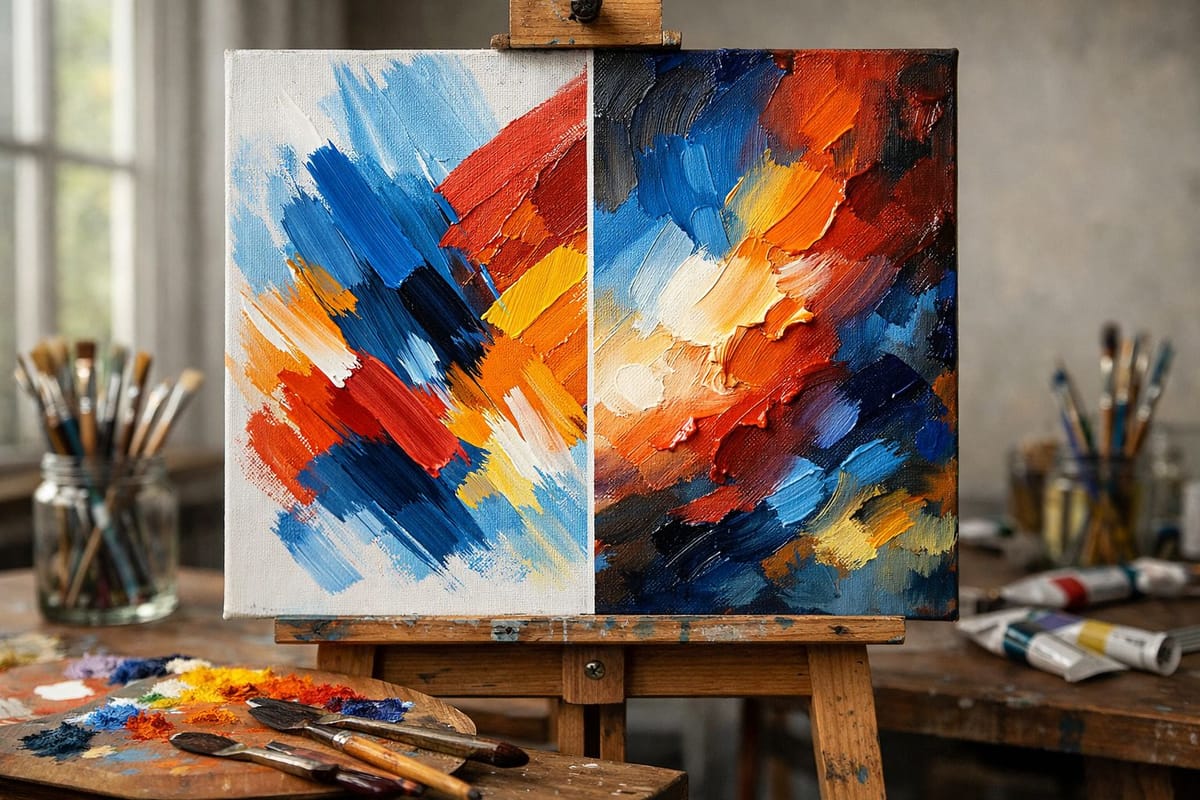
Both acrylic and oil paint can be beautiful to work with, and they are both so different in your hand and in your work process. Acrylic paint is suitable for fast-drying, easy cleaning, and flexible surfaces, whereas oil paint is suitable for slow blending, deep richness, and traditional control. The best option depends on how quickly you need to dry your layers, how long it takes to mix, and the space you have in your studio. This guide compares behaviour, cost, safety, and surfaces so you can pick the paint that fits your process.
Acrylic Paint Explained for Artists
Acrylic paint is a water-based, fast-drying paint that allows for building up rich colour. It applies to many surfaces and conforms to both light washes and dense materials. It is appropriate for those artists who like speed, sharp edges, and unstable methods.
What Acrylic Paint Is Made Of
Acrylic paint is composed of pigment, an acrylic polymer binder, and water. Water evaporation causes the binder to form a strong, flexible film. This blend facilitates a sharp texture, good bonding, and finishes that can be bent on numerous supports.
How Acrylic Paint Behaves While Painting
Acrylic dries within minutes; as such, brushwork goes on, and layers build up. Other colours dry a bit darker because the wet shine is lost as the water evaporates. Its adherence to numerous surfaces makes it effective for cleaning shapes, but it increases blending time.
Artistic Styles That Work Best With Acrylic
Acrylic suits abstract and modern work well, as it is easily applied with a high degree of colour intensity. It is also appropriate for mixed media and illustration since edges remain sharp and the surfaces are dissimilar. It justifies such experimental approaches as pouring, stencilling, and collage constructions.
Oil Paint Explained for Artists
Oil paint is a slow-drying paint made with pigment and oil, allowing it to blend and achieve deep colour. It remains usable for longer, so you can ease edges and contour shapes more easily. It is preferred to ancient methods and glossy layered finishes.
What Oil Paint Is Made Of?
Oil paint is made with both pigment and drying oils, such as safflower or linseed oil. The oil binder produces a smooth, pliant paint film that may appear profound and saturated. This system favours sleek richness, smooth fades, and overlay gleam in the long run.
How Oil Paint Feels on the Canvas
Oil paint is also responsive and smooth since it does not dry quickly. You can work slowly and with brushstrokes without being in a hurry. This increased amount of working time favours elegant edges, subtle alterations in value, and a relaxing amount of correction.
Artistic Styles That Work Best With Oil Paint
Oil paint is the most suitable for realism, as it allows for easy, soft modelling and refinement. It is powerful as portraiture, where the skin requires less dramatic changes and more control of color. It is also masterful in landscapes and classical techniques, created with layers of depth.
Acrylic vs Oil Paint: Core Differences Every Artist Should Know
Acrylic is quick to dry and removable with water, whereas oil takes a long time to dry, mixes longer, and requires oils or solvents to clean up and control in the studio.
Blending, Layering, and Technique Control Compared
Oil has a long blending time for soft transitions and allows quick, sharp strokes with controlled edges, thanks to acrylic.
Blending Soft Transitions and Gradients
With oil, gradient lines are simpler because the paint remains active over a longer period. Acrylic can blend, though it mostly requires quick moves and premeditated edges. Oil tends to be more lenient with skin tones, skies, and slight transitions.
Layering and Glazing Techniques
The majority of acrylic layers are dry-over-dry, and the layers may be stored in one session. Especially oil, it can be wet-on-wet or glazed in depth. Acrylic glazes dry quickly, whereas oil glazes usually appear brighter as they dry.
Health, Safety, and Studio Environment
Oil tends to require ventilation and safer practices when using solvents and disposing of materials, whereas acrylic is usually non-odorous and easier to work with.
Toxicity, Fumes, and Ventilation
In small rooms, acrylic is more convenient because it does not emit harsh solvent fumes. Oil painting may include solvent vapours, and so air movement and storage are significant. The comfort of the studio is essential, particularly when using it in the long run and in common areas.
Safe Alternatives and Modern Materials
The need to use powerful solvents is minimized, and cleanup is made easy with water-mixable oils. A healthy setup can also be facilitated by low-odour media and cleaners that are not overly hazardous. These alternatives make oil painting more accommodating in contemporary household studios.
What are the differences in Cost and Materials?
Acrylic is cheaper since the medium does not require as many additional materials, whereas oil is expensive because of the medium, brush maintenance tools, and surface preparation.
Paint, Media, and Tool Costs
Acrylic can be thinned and cleaned with water; hence, you would require fewer supplies when trying it out for the first time. Oil usually contains medium oils, cleaning oils, and occasional-use solvents, as well as more vigorous brush-care regimes. Oil surfaces also need superior priming or superior supports.
Long-Term Studio Expenses
If the brush dries out in use, acrylic can be used to extend its life. With the aid of oil, a longer session time can be used, but the additional expense is the supporting materials. Long-term spending can also be determined by storage, safe disposal, and ventilation.
Surface Compatibility and Preparation
Acrylic and oil both work on canvas, but they need different prep to stay stable and predictable.
Best Surfaces for Acrylic Paint
Acrylic is suitable for canvas, paper, wood, and mixed-media boards. It adheres to absorbent surfaces and is also stable on sealed supports. Priming enhances consistency; however, acrylic is more tolerant of materials.
Best Surfaces for Oil Paint
Oil is effective on pre-prepared canvas, linen, and inflexible panel over primed surfaces. A closed ground will ensure that oil does not seep into the support and undermine it. It can be prepared well to achieve durability, integrated feel, and stability.
Choose Acrylic Paint If You Want Speed and Flexibility
Acrylic would be the best option when you need fast drying and easy cleaning, along with the ability to paint on numerous surfaces without an elaborate studio setup.
- Fast layering and drying
- Easy cleanup
- Modern and experimental styles
- Small or shared studio spaces
Choose Oil Paint If You Want Depth and Blending Control
Oil is the solution when blending time is needed, the depth is rich, and an old-fashioned approach that favours slow refining and a gallery-type finish is necessary.
- Rich color depth
- Long blending time
- Traditional techniques
- Gallery-ready finishes
Final Verdict:
- Acrylic is suitable for fast painting.
- Oil suits slow blending work.
- Acrylic is very easy to clean.
- Oil requires less dangerous studio practices.
- Acrylic is ideal for most surfaces.
- Oil prefers primed supports.
- Pick based on your workflow.
Acrylic vs Oil Paint FAQs for Artists
Can Oil Paint Go Over Acrylic Paint Safely?
Oil may be added on top of fully cured acrylic, as acrylic provides a stable base layer. Oil should not be applied over acrylic, as bonding and flexibility may fail.
Which Is Easier for Beginners, Acrylic or Oil?
Acrylic is easier to start with because it cures quickly and can be washed with water. Oil is simpler to mix; however, it needs additional preparation and handling.
How Do I Get Smoother Blends With Acrylic Paint?
Smooth acrylic blends need quick transitions, soft brushes, and controlled moisture while you work. Slower-drying mediums can also extend the blending window for softer gradients.
Why Do Oil Paintings Take So Long to Dry?
The process of drying oil paint is slow, and not by evaporation, because it is an oxidation process. Thick layers and some pigments may further slow the drying.
Is Oil Paint Always More Expensive Than Acrylic Paint?
The reason why oil is more expensive is that you frequently purchase mediums, cleaners, and more prepared surfaces. Acrylic tends to remain cheaper as the simple setup is more straightforward.